
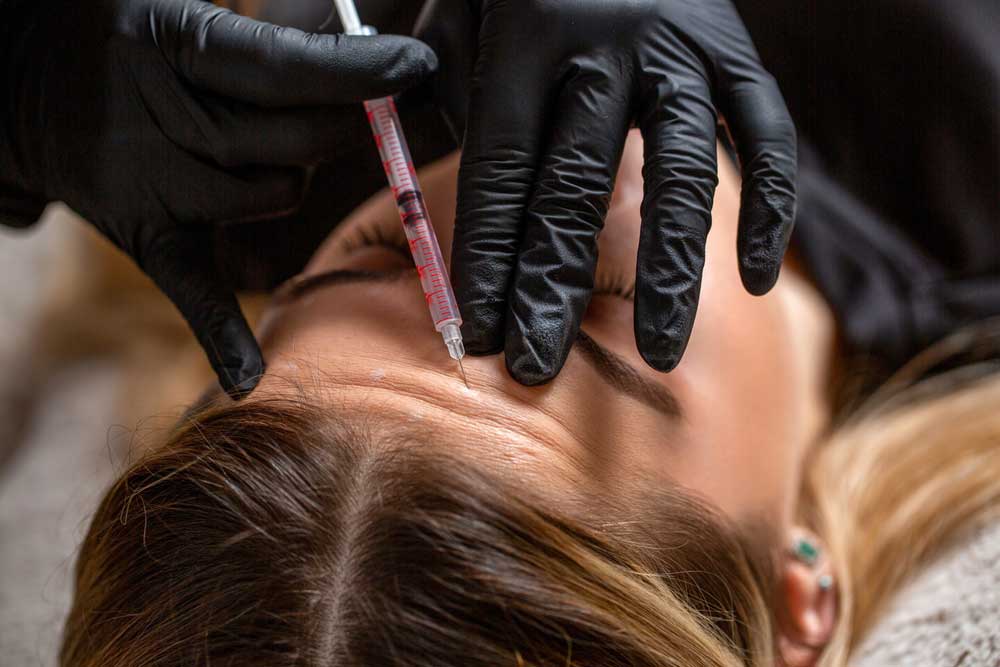
Botox has a reputation for erasing wrinkles, but that reputation doesn’t tell the full story. Botox targets one specific type of wrinkle, and knowing whether your lines fall into that category can save you time, money and frustration.
Here’s what the team at Laser Aesthetics of Cape Cod wants you to know before booking your first (or next) Botox appointment.
What Makes a Wrinkle “Botox Treatable”?
Not all wrinkles form the same way. Dynamic wrinkles develop because of repeated muscle movement. They are what you see every time you raise your eyebrows, squint into the sun, or frown in concentration. When you’re younger, your skin snaps back into place the moment you relax the expression. But over years and years of making the same movements, those temporary creases start sticking around. They become visible even when your face is completely relaxed.
Botox treats dynamic wrinkles. It works by temporarily blocking the nerve signals that tell those specific muscles to contract, so the muscle causing the line relaxes and the line softens along with it.
Year after year, neuromodulator injections are the most requested minimally invasive treatment in the country. Nearly 9.9 million neuromodulator treatments were performed in the United States in 2024 alone.
Where Does Botox Work Best on the Face?
At Laser Aesthetics of Cape Cod, we evaluate each face individually and design your treatment plan around your unique needs. The areas that typically respond well to Botox include:
Forehead Lines
Horizontal creases that run across your forehead form when your frontalis muscle (the large muscle spanning your forehead) contracts to raise your eyebrows. Think about how often you do that in a single day! Over time, that repetitive motion etches lines into your skin permanently.
Botox relaxes the frontalis muscle just enough to smooth out those creases without making your forehead look frozen or expressionless. A skilled injector knows how to strike that balance, softening the lines while keeping your face natural and animated.
Frown Lines (The “Elevens”)
The vertical lines that form between your eyebrows, sometimes called glabellar lines or “elevens,” develop when the corrugator and procerus muscles contract, pulling the skin inward. Even if you’re in a great mood, deep frown lines can make you appear upset or exhausted.
This area was one of the first to receive FDA approval for cosmetic Botox treatment. Results here tend to be particularly satisfying because frown lines have an outsized effect on how people perceive your emotions. Smoothing them out can give your whole face a more relaxed, approachable look.
Crow’s Feet
The fine lines that fan out from the outer corners of your eyes are affectionately known as crow’s feet. They show up when you smile, laugh or squint due to the contraction of a circular muscle called the orbicularis oculi. Because the skin around the eyes is some of the thinnest on your body, it’s especially prone to creasing.
Botox can soften the appearance of these lines while preserving the warmth and expressiveness of a genuine smile. The treatment is quick and involves just a few small injections on each side.
Other Muscle-Related Concerns Botox Can Treat
Botox is surprisingly versatile. Several other areas of the face and neck also respond well to neurotoxin treatment:
Bunny lines are the diagonal creases that appear on either side of your nose when you scrunch it up. Botox relaxes the nasalis muscle to smooth them out.
Lip lines (sometimes called “smoker’s lines” even though nonsmokers get them, too) are the small vertical creases that form around the edges of the lips. Botox can soften them without affecting your ability to speak or eat normally.
Chin dimpling refers to the pebbled, “orange peel” texture that can appear on the chin when the mentalis muscle contracts. Botox addresses this effectively with just a few units.
Neck bands, the vertical cords that become more prominent with age, form when the platysma muscle tightens. Botox injected along these bands can relax the muscle and create a smoother neck contour, a treatment sometimes referred to as the “Nefertiti lift.”
What About “Preventative Botox?”
Botox doesn’t just treat existing dynamic wrinkles; it may also help prevent new ones from forming. This treatment approach, commonly known as “preventative Botox” or “baby Botox,” is popular among patients in their late 20s and early 30s who are seeing the first signs of aging start to appear.
Here’s the theory behind it: if dynamic wrinkles are caused by repeated muscle contractions, then reducing the intensity of those contractions early on means there is less opportunity for deep-set lines to develop. Starting with small amounts of Botox before wrinkles become permanently etched into the skin can delay the point where they’re visible at rest.
If you’re consistent with your treatments, this approach may also mean you eventually need less product per session, because the treated muscles gradually lose strength.
What Lines Botox Can’t Treat, and What Can Instead
Static wrinkles are the lines still visible when your face is completely at rest, unrelated to any expression you happen to be making. They form through a variety of different processes: years of collagen loss, sun exposure, and gravity gradually thinning and loosening the skin. Botox cannot relax a wrinkle that isn’t being caused by muscle movement, no matter how expertly it’s injected.
If your concern is a static wrinkle, a more effective plan usually involves treatments that fill underneath the line or rebuild skin structure, such as dermal fillers, Potenza RF microneedling, or a chemical peel to support collagen renewal.
Many patients see the best outcomes from combining Botox and fillers. Botox handles the movement-based lines while fillers address volume-related creases. Together, they form a comprehensive nonsurgical rejuvenation plan that’s sometimes called a “liquid facelift” or “facial balancing.” Your provider at Laser Aesthetics of Cape Cod will explain if a combination of treatments may be the best fit for your goals during your consultation.
Book Your Botox Consultation in Hyannis, MA
Now that you know which wrinkles Botox can (and can’t) treat, the next step is getting a personalized plan that addresses your specific concerns. With more than 15 years of experience treating Cape Cod patients, our approach starts with a full-face evaluation. Cheryl Heinzmann, RN, BSN watches how your muscles move when you talk, smile, and frown, then builds a plan around your specific patterns. Call 508-778-6363 or schedule a consultation today.